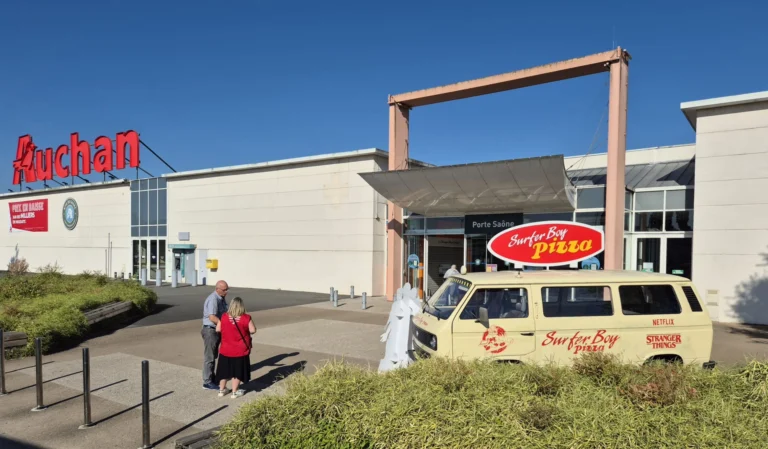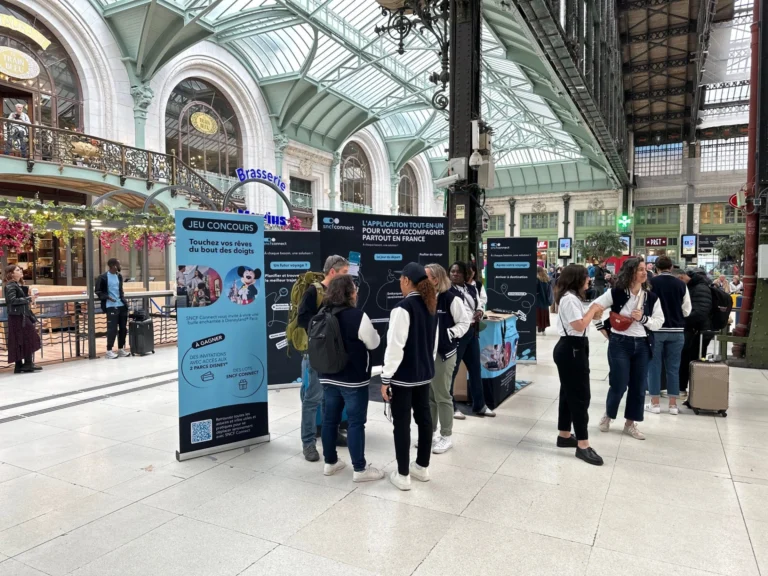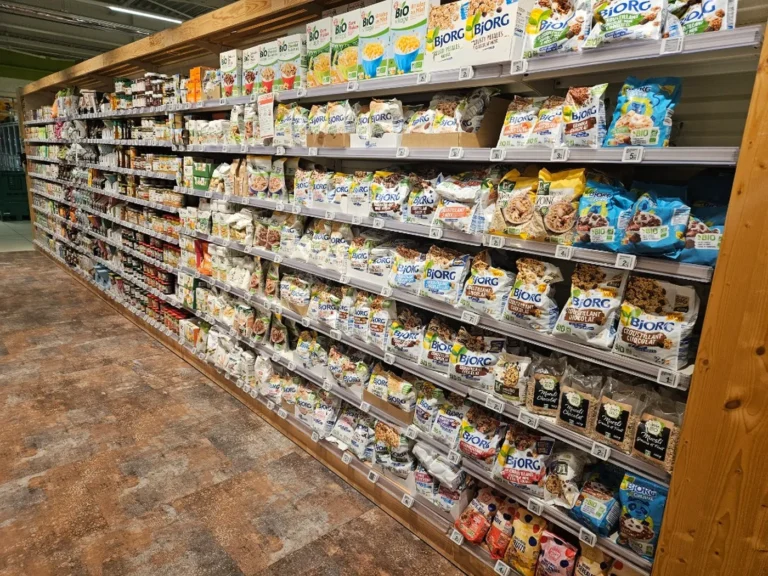
Having a good product isn't enough. It has to be seen, presented and understood at the point of sale. This is where trade marketing comes into play, as a strategic (and often under-exploited) lever for maximizing the impact of your sales actions directly at the point of sale.
More than just logistical or visual support, trade marketing enables you to turn every shelf, every shelf-head and every animation into a conversion opportunity. When well thought-out, it can make all the difference between an ignored product and a chosen one.
A hybrid discipline, between brand and distributor
Above all, trade marketing is about collaboration. It's not about promoting a product alone, but making it exist in a real sales environment, shared by several players: the brand, the distributor, the sales teams, and the consumers. At the crossroads of strategic marketing and operational imperatives, it aligns everyone's interests.
For example, a beverage brand can co-construct with the supermarket chain and an operational marketing partner like RMA, an on-shelf animation scheme, including placement at the head of the aisle, a promotional offer and salesperson training. The result: improved visibility, boosted sales and a consistent customer experience.
Trade marketing isn't just about point-of-sale advertising or shelf placement. It's a joint dynamic that enables the brand to sell better, and the retailer to convert more effectively.
Why trade marketing today?
Because in-store, everything happens in a matter of seconds. Faced with a dense offer, it's the presentation, accessibility and staging of a product that make the difference. Trade marketing makes it possible to master these levers at the most decisive moment: the moment of purchase.
It's also an excellent way to stand out from the crowd on saturated shelves. By presenting your product assets in a coherent and differentiating way, you guide buyers in their choice and reinforce your anchoring in their minds. You create coherence between the brand's message and the actual experience.
In addition, a well-thought-out trade marketing strategy strengthens commercial relations with your distributors, bringing them tangible value. You become a proactive partner, a source of new ideas, which can open up additional visibility and referencing opportunities.
Last but not least, the point of sale is a wonderful place for observation. By talking to the teams on the shelves and observing their behavior, you can gather valuable insights to feed your future campaigns.
What this means for your brand in concrete terms
In saturated store shelves, it's not always the most visible that wins, but the one that interacts intelligently with its environment. Thanks to trade marketing, you can adapt your actions to each type of outlet (supermarkets, hypermarkets, specialty stores, organic channels, regional chains), and to each consumer profile.
Your brand becomes more coherent, more impactful, more useful to the retailer. You can also measure precisely what's working: product rotation rate, display performance, impact of an animation on sales. This is actionable data that you can reuse for future campaigns.
Build a strategy that serves your sales
A good trade marketing campaign starts by listening to you: your objectives, your constraints, your in-store contacts. Then comes the design, with adapted formats: shelf headers, box pallets, animation tables, stop-rays and effective mechanisms such as discovery offers, competitions or demonstrations.
But the success of an operation also depends on the quality of its execution. Are your materials well delivered? Is the space respected? Are the sales staff trained? Is the animation smooth? All these elements have a direct influence on the buying experience.
Finally, good trade marketing is measurable marketing. With each operation, you learn from the results to refine your next campaigns. This is what turns a one-off action into a lasting strategy.
Common mistakes to avoid
Thinking the product will sell itself
Even the best products need a showcase to shine. A neglected display, an unstrategic location, generic POP... and your offer goes unnoticed. Trade marketing allows you to dramatize your product's presence and amplify its seductive power on the shelf.
Standardize all points of sale
Not all stores are alike. Between a city-center supermarket and a regional chain on the outskirts of town, constraints, flows and buying behaviors differ. Applying a one-size-fits-all approach to all points of sale means running the risk of failing to convince any of them. You have to know how to adapt activations to each context.
Considering the distributor as a mere channel
Distributors aren't just there to display and sell your products. They have their own objectives, their own constraints, their own customers. To neglect them in your strategy is to deprive yourself of a precious ally. Involving store teams from the outset, listening to them, training them and valuing them is a key condition for success.
Minimizing the importance of field training
A well-informed salesperson or consultant can make all the difference. When they know your products, their advantages and their positioning, they can naturally recommend them. By training your sales teams in your message, you can extend your marketing to the last conversation before the purchase.
RMA, your trade marketing partner in the field
Because at RMA, we do much more than deploy trade operations. We work hand-in-hand with your marketing teams, sales people and distributors to build solid, realistic and truly effective trade marketing schemes.
Our expertise:
- Perfect knowledge of distribution channels,
- The ability to design personalized action plans,
- Field experience in sales activation,
- Support from A to Z: from initial brief to post-campaign review.
We believe in collective intelligence, precision of detail, and our teams' ability to adapt. That's what makes the difference in a department.