Promotional tours, field activation, event buses... marketing roadshows come in many forms, but they all have the same goal: to reach audiences and make an impact.
This comprehensive guide helps you understand what a roadshow is, why it works, and how to organize one effectively to generate visibility, leads, and sales.
What is a marketing roadshow?
A roadshowis a promotional tour: the brand travels from city to city to present its products or services as close as possible to the public (train stations, city centers, shopping areas, urban events).
Unlike a one-off event, a roadshow is mobile and replicable: the same concept, the same kit, the same script, deployed step by step to ensure consistency and performance.
The device can take several forms depending on the objective and the terrain: an event bus parked on a forecourt, an agile roadshow truck for moving between locations, or a mobile container converted into a mini-showroom/pop-up store.
The benefits of a roadshow for your brand
It is particularly effective when a brand seeks to recreate real contact with its targets, while maintaining clear business objectives. When well thought out, it has an impact on both image and performance.
Create the encounter
Demonstration in real-life conditions, direct exchanges, immediate feedback from the audience.
Gain visibility
Each step strengthens brand awareness and helps reach new local audiences.
Convert
Curiosity turns into engagement, then sales, thanks to a smooth and measurable journey.
When properly orchestrated, road shows generate qualified traffic, lead acquisition, and additional revenue directly attributable to the field.
Points to watch out for
Before getting started, certain parameters must be anticipated in order to ensure the tour's safety and preserve the brand image.
- Budget and resources: a tour involves logistics, field teams, and equipment in several cities; everything must be costed and planned.
- Quality of execution: poorly planned activation is immediately apparent; each step must be mastered.
- Timing & weather: choosing the right dates and being able to activate a plan B are crucial to maintaining performance.
How to organize an effective roadshow?
A successful roadshow is based on a clear methodology, designed to be replicable from city to city.
1. Frame the objective
First and foremost, set SMART objectives: lead generation, sales, visibility, or product launch. These objectives determine the format, cities, and performance indicators. Target personas must be precisely identified in order to tailor the message on the ground.
2. Select locations and dates
The success of a roadshow depends heavily on foot traffic. Train stations, city centers, shopping areas, and urban events offer different opportunities. Peak times (after work, weekends, key shopping periods) maximize impact.
3. Design a clear and attractive system
The message must be understood in less than three seconds. A mobile stand that is visible from a distance, clear point-of-sale advertising, a short demonstration, and an explicit promise are essential.
Depending on the context, an event bus offers maximum visibility, a roadshow truck allows you to move quickly from one location to another, while a mobile container creates an immersive and structured experience.
Simple mechanics such as games, participatory activities, sampling, or tastings encourage engagement and trial.
4. Secure the legal framework
A roadshow cannot be improvised in a public space. Permits, security, power supply, insurance, and image rights must be anticipated to avoid any operational obstacles.
5. Connecting the field to the digital world
Every city must be traceable. Dedicated QR codes, local landing pages, and promotional codes make it possible to extend the experience and accurately measure the impact of each stage.
6. Measure and improve
Management is based on clear KPIs: visitors, interactions, scans, conversion rates, cost per lead, ROI. Centralized in a dashboard, they enable optimization of the system throughout the tour.
What makes the difference in the field
On a roadshow, simplicity is an asset. Distributing flyers can initiate conversation, but it is demonstrations, sampling, and games that create real interaction.
QR codes extend the discussion, promo codes link contact to sales, and field feedback (verbatim comments, opinions, behaviors) enrich activation from city to city.
Regardless of the format (event bus, truck, delivery tricycle, or mobile container), clarity of message and smoothness of the journey remain priorities.
Field evidence: roadshows operated by RMA
At RMA, we design and manage roadshows that are built to deliver long-term results, with a highly operational approach: multi-city logistics, trained field teams, accurate reporting, and continuous optimization.
Netflix – Stranger Things
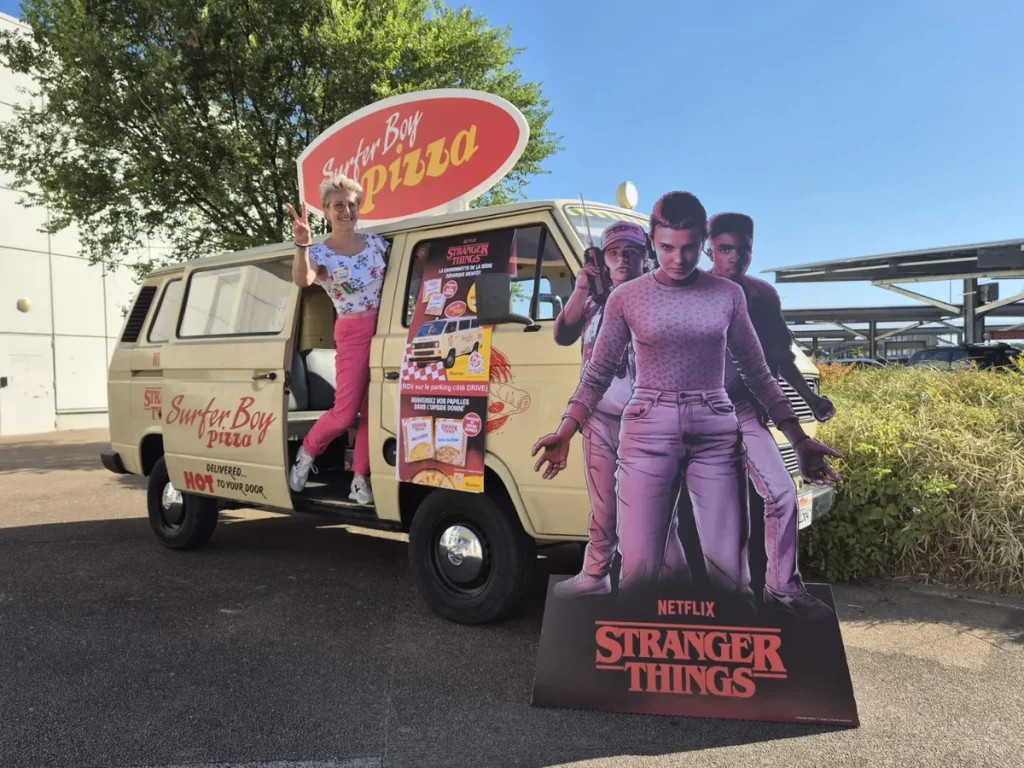
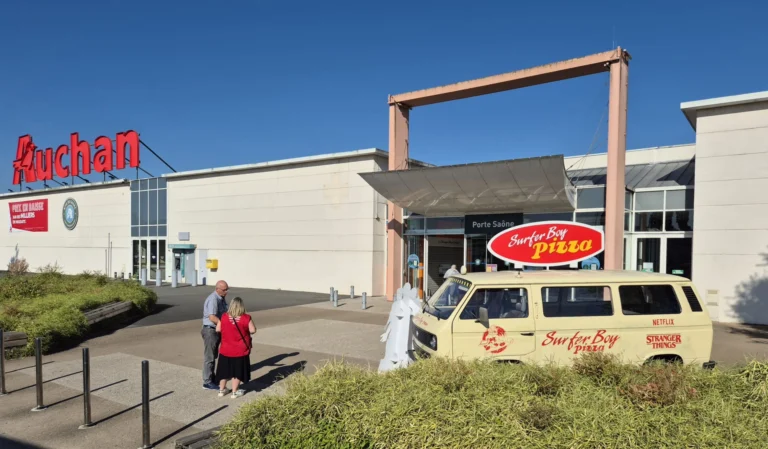
In three weeks, RMA orchestrated the tour of the Pizza Surfer Boy van from the Stranger Things series to 15 hypermarkets (covering over 7,500 km), with a dedicated driver and daily reporting.
The result: an ultra-readable device at the point of sale that generates qualified traffic and immediate engagement.
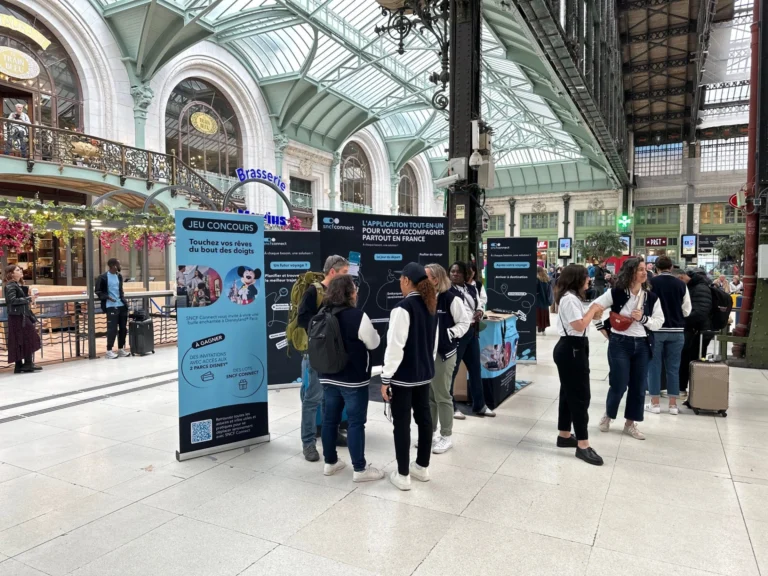
SNCF Connect
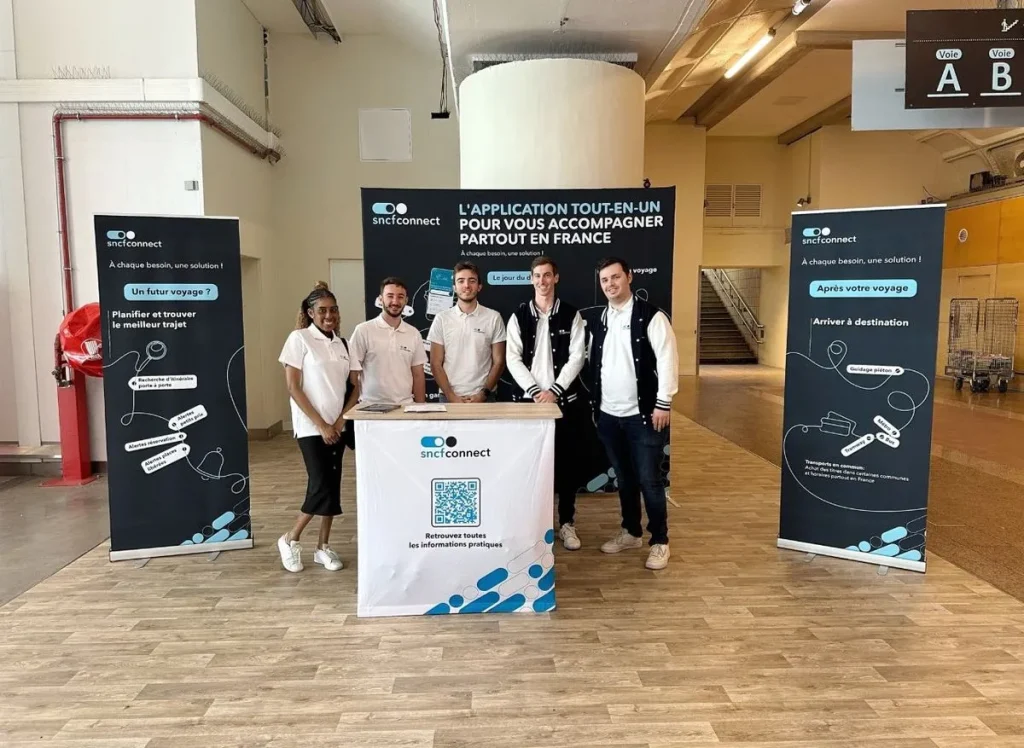
Deployment in five major French train stations (Paris, Lyon, Nice, Nantes, Lille) to promote the SNCF Connect mobile app.
Result: +2,000 travelers reached, +1,250 surveys collected, and an immediately measurable and replicable local impact.
What your street marketing agency should deliver
A specialized agency does more than just provide a booth. It takes care of the entire chain: strategy, creative concept, multi-city logistics, recruitment and briefing of ambassadors, equipment, authorizations, street-to-digital gateway, and transparent reporting.
The goal is not to be visible, but to transform field contact into concrete results.
Turn your idea into a successful tour
RMA designs and operates your B2C roadshow from start to finish: itinerary, legal framework, logistics, event teams, field activation, and KPI tracking through to ROI.
Contact RMA at (+33) 4 75 46 77 67 or by email at contact@rmasa.com to obtain a replicable concept, a controlled budget, and a realistic schedule, in order to transform attention into sales from the very beginning.